How to Evaluate Fleet Insurance Policies: 2026 Guide
- Guyorguy Laguerre
- 3 days ago
- 10 min read


TL;DR:
Evaluating fleet insurance involves comparing coverage, documentation, and cost drivers to avoid costly gaps and optimize premiums. Valid and complete submission packages, including loss runs and driver records, are essential for accurate quotes and better underwriting outcomes. Building a structured comparison and working with specialized brokers enhances risk management, reduces costs, and ensures better coverage alignment.
Fleet insurance is a single commercial policy covering two or more business vehicles under one unified contract, and knowing how to evaluate fleet insurance policies correctly is the difference between adequate protection and a costly coverage gap. Most fleet managers underestimate how much variation exists between quotes from different carriers, even when the vehicles and drivers look identical on paper. Consolidating individual vehicle policies into a fleet policy can reduce premiums by 10% to 25% per vehicle while simplifying administration through unified renewal dates. The evaluation process covers three core areas: coverage structure, cost drivers, and documentation quality. Get all three right, and you control both your risk exposure and your insurance budget.
How to evaluate fleet insurance policies: coverage first
Fleet insurance policy comparison starts with understanding what coverage types are actually on the table. Not every policy includes the same components, and carriers rarely volunteer the gaps.

Liability, collision, and comprehensive
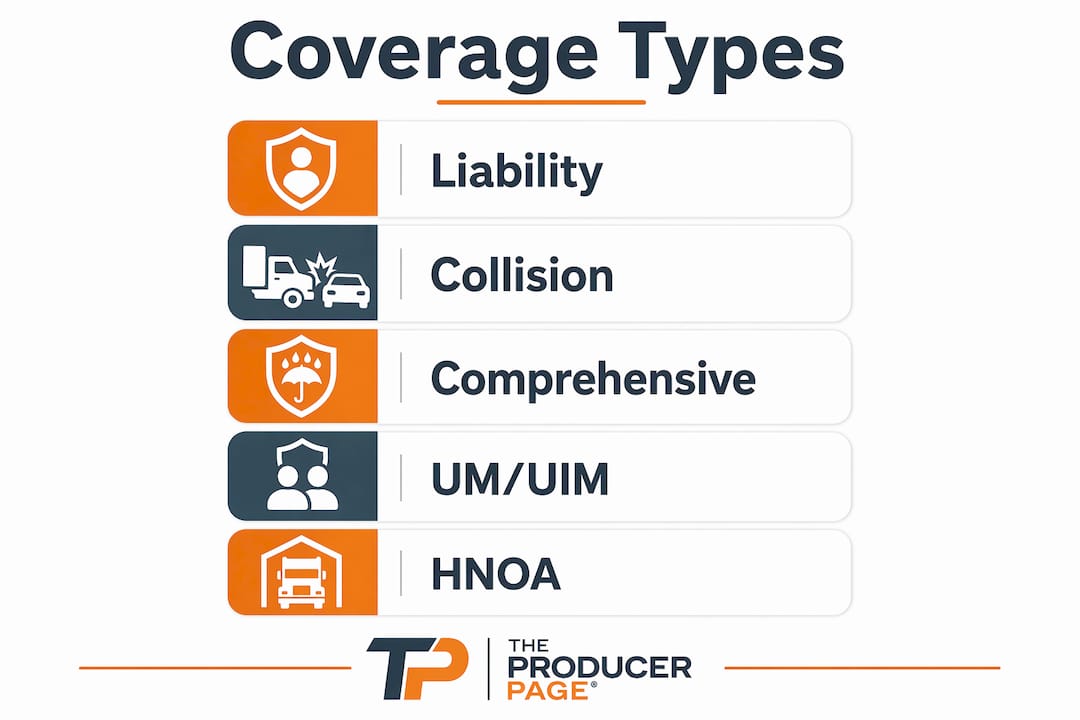
Commercial auto liability is the foundation of any fleet policy. It pays for bodily injury and property damage your drivers cause to third parties, and most states set minimum limits that are far too low for commercial operations. Collision coverage pays for damage to your own vehicles after an accident regardless of fault. Comprehensive coverage handles non-collision losses: theft, vandalism, hail, and fire. Together, these three form the baseline that every fleet policy should carry.
Uninsured motorist and medical payments
Uninsured Motorist and Underinsured Motorist coverage, commonly written as UM/UIM, protects your drivers when the at-fault party carries no insurance or insufficient limits. Medical Payments coverage, or MedPay, pays driver and passenger medical costs regardless of fault. Both coverages are inexpensive relative to their protection value, yet many fleet managers drop them to reduce premiums. That trade-off rarely holds up after a serious accident.
Hired and Non-Owned Auto coverage
Hired and Non-Owned Auto (HNOA) coverage is one of the most overlooked gaps in fleet insurance. If any of your employees rent a vehicle for a business trip or use a personal vehicle to make a delivery, your standard fleet policy provides zero liability protection for that exposure. HNOA fills that gap directly. The endorsement is typically inexpensive, but the liability exposure it covers can reach seven figures.
Common fleet-specific endorsements to consider
Beyond the standard coverage types, fleet operations often require additional endorsements. The list below covers the most common ones worth requesting in every quote:
Rental reimbursement: Pays for substitute vehicles while a fleet unit is being repaired after a covered loss.
Downtime coverage: Compensates for lost revenue when a commercial vehicle is out of service.
Cargo liability: Required if your vehicles transport goods belonging to clients or customers.
Roadside assistance: Covers towing, fuel delivery, and lockout services for commercial vehicles.
Gap coverage: Pays the difference between a vehicle’s actual cash value and the outstanding loan balance after a total loss.
Each endorsement adds a measurable cost, but each also closes a specific exposure. Evaluate them against your actual operations, not a generic checklist.
Which factors drive fleet insurance costs?
Understanding fleet insurance options means understanding what underwriters actually price. The premium you receive is a direct reflection of the risk profile you present, and several factors carry more weight than most fleet managers realize.
Fleet size and vehicle mix. Larger fleets generally receive better per-unit pricing because the risk is spread across more vehicles. The type of vehicle matters just as much. A fleet of light-duty sedans carries a very different risk profile than a mixed fleet of box trucks and cargo vans. Carriers price each vehicle class separately, so your overall premium is a weighted average of multiple risk categories.
Driver quality and MVR history. Driver quality is the top cost driver in fleet insurance pricing. A single driver with multiple violations can increase premiums across the entire fleet, not just for that individual. Running Motor Vehicle Record (MVR) checks annually and maintaining a written driver acceptance policy are two of the most direct ways to control this cost.
Loss history and loss runs. Carriers examine three to five years of claims data before pricing a fleet. Frequent small claims signal poor risk management just as much as a single large loss. A fleet with a clean loss history and documented safety programs qualifies for experience-rated pricing that rewards good performance with lower premiums.
Garaging location and operational radius. Where your vehicles are parked overnight and how far they travel affects pricing significantly. Urban garaging locations carry higher theft and collision rates than rural ones. Fleets operating across multiple states face additional regulatory complexity that some carriers price conservatively.
Deductibles and coverage limits. Higher deductibles reduce your premium but increase your out-of-pocket cost per claim. The right deductible level depends on your cash flow and claims frequency, not just the premium savings. Mismatched limits across quotes are one of the most common reasons fleet managers make inaccurate comparisons.
Pro Tip: Telematics programs can yield direct discounts of 5% to 15% and reduce claims frequency by 20% to 30% over time. Some carriers allow telematics data to be applied retroactively mid-term once safe driving history is documented, which means you do not have to wait until renewal to see the savings.
Businesses that combine higher deductibles, annual carrier shopping, and telematics can save 15% to 40% on total fleet insurance costs. That range is wide because the actual savings depend on your starting risk profile and how aggressively you implement each strategy. For more detail on proven cost reduction methods, the Insuaria guide on reducing trucking insurance costs covers fleet-specific tactics in depth.
What documentation do you need for accurate fleet quotes?
One of the most practical tips for fleet insurance evaluation is this: the quality of your submission package determines the quality of your quotes. Carriers that receive incomplete information fill the gaps with worst-case assumptions, and those assumptions inflate your premium.
Carriers in 2026 typically require a 9-part submission package to produce accurate, bindable quotes. Incomplete submissions cause delays and produce estimates rather than firm pricing.
Document | What to include |
Vehicle schedule | Year, make, model, VIN, gross vehicle weight, and current value for every unit |
Driver list | Full legal name, date of birth, license number, state, and years of experience |
Loss runs | Three to five years of claims history from your current carrier, signed and dated |
Operations summary | Description of what your vehicles haul, routes traveled, and annual mileage per unit |
Business entity info | Legal business name, FEIN, DOT number if applicable, and years in operation |
Current policy declarations | Existing coverage limits, deductibles, and endorsements for comparison |
Garaging addresses | Physical address where each vehicle is stored overnight |
Driver MVR reports | Current motor vehicle records for all listed drivers |
Safety program documentation | Written driver policies, training records, and any telematics program details |
The driver list and loss runs carry the most underwriting weight. Loss runs must come directly from your current carrier, not from your own records, and they need to show both open and closed claims. If your business is newer than three years, carriers will ask for a letter of experience or accept a shorter history with additional documentation.
Pro Tip: Send identical vehicle and driver schedules to every broker or carrier you approach. Normalizing your submission data forces apples-to-apples comparisons and prevents one carrier from pricing conservatively because they assumed a worse driver profile than you actually have.
Working with a commercial lines broker who specializes in fleet accounts accelerates this process. A specialist broker knows which carriers prefer which fleet types, and that carrier matching directly affects both pricing and coverage quality. For a full breakdown of what fleet coverage should include, the Insuaria resource on fleet insurance coverage is worth reviewing before you submit your first quote request.
How to choose the best fleet insurance policy
Fleet insurance coverage analysis requires a structured comparison process. Receiving three quotes and picking the lowest number is not evaluation. It is guessing.
Build a side-by-side comparison matrix
Create a spreadsheet that lists every quote in columns and every coverage element in rows. Match effective dates, vehicle lists, driver lists, deductibles, liability limits, and endorsements across every quote before you compare premiums. Large price variances between quotes almost always trace back to differences in coverage assumptions or underwriting data, not carrier generosity. A quote that looks 20% cheaper may be missing HNOA coverage, carrying lower UM/UIM limits, or using a higher deductible than you specified.
Recognize the warning signs of a bad quote
Unusually low quotes often miss crucial data or coverages, and the gaps surface at claim time rather than at binding. Watch for these red flags during your fleet insurance policy comparison:
The quote does not list specific endorsements you requested.
The carrier has not asked for loss runs or driver MVRs.
The effective date or vehicle count does not match your submission.
The liability limits are lower than your contracts with clients require.
The carrier is not admitted in your state of operation.
Align renewals and plan your timeline
Start your evaluation process 90 days before your current policy expires. Carriers need time to underwrite a complete submission, and rushing the process forces you to accept whatever is available rather than what is best. If you operate in multiple states, stagger your renewal review so you are not managing multiple simultaneous evaluations. Aligning all vehicles to a single renewal date simplifies administration and gives you more leverage in annual negotiations.
Use risk mitigation as a negotiating tool
Proactive risk management, including documented driver safety programs and active telematics use, gives underwriters a reason to price your fleet favorably. Present your safety program documentation alongside your submission package, not as an afterthought. Carriers that see evidence of active risk management treat your fleet as a preferred account rather than a standard one. That distinction can mean the difference between a rate increase and a renewal credit at your next evaluation cycle. The Insuaria article on fleet risk management covers how safety programs translate directly into underwriting outcomes.
Key takeaways
Evaluating fleet insurance policies requires matching coverage structure, cost drivers, and documentation quality before comparing any premiums.
Point | Details |
Coverage gaps cost more than premiums | HNOA, UM/UIM, and endorsements prevent losses that base policies do not cover. |
Documentation quality drives quote accuracy | A complete 9-part submission prevents inflated estimates and worst-case assumptions. |
Driver quality is the top cost driver | Annual MVR checks and written driver policies directly reduce fleet premiums. |
Normalize all submissions | Send identical schedules to every carrier to force true apples-to-apples comparisons. |
Telematics compounds savings over time | Discounts of 5% to 15% plus reduced claims frequency improve renewal pricing each cycle. |
What I have learned from years of fleet insurance evaluation
Fleet managers consistently make the same mistake: they treat insurance evaluation as an annual administrative task rather than a year-round risk management function. I have seen fleets with excellent safety records pay 30% more than comparable operations simply because they never updated their loss runs, never documented their driver training program, and never gave their broker a reason to fight for better pricing.
The carriers that price fleet accounts most favorably are not looking for the lowest-risk fleet. They are looking for the most organized fleet. When you submit a complete package with clean MVRs, documented safety protocols, and three to five years of loss runs showing a downward claims trend, you are telling an underwriter a story. That story determines your rate more than any single factor on the application.
The 2026 market has also shifted in ways that reward technology adoption. Carriers are increasingly willing to offer mid-term adjustments for fleets that implement telematics after binding. That was rare five years ago. If you have not explored a telematics program, the pricing argument for doing so has never been stronger.
One more observation: the broker relationship matters more than most fleet managers acknowledge. A broker who specializes in commercial fleet accounts knows which carriers are actively competing for your fleet class and which ones are pulling back. That intelligence is worth more than any online comparison tool. Choose your broker the same way you choose your coverage. Ask hard questions, check their references, and verify they actually write fleet accounts at scale.
— Guyorguy
Get your fleet insurance intake organized with Insuaria
Pulling together a complete fleet insurance submission package is the step most fleet managers dread, and it is also the step that determines whether your quotes are accurate or inflated.
Insuaria is a compliance-first intake and referral platform built to help fleet operators and business owners organize exactly the information licensed insurance professionals need to review your coverage. Through a simple business intake form, you can submit your vehicle details, driver information, and operational data in one place before a licensed agency partner follows up. Insuaria does not provide insurance advice or bind coverage. It organizes your information so the process moves faster and more accurately from the start. Start your fleet insurance intake today and give your next quote request the foundation it needs.
FAQ
What is the minimum fleet size for a fleet insurance policy?
Most carriers define a fleet as two or more commercial vehicles, though some require five or more vehicles to qualify for fleet-specific pricing and underwriting. The threshold varies by carrier and vehicle class.
How do loss runs affect fleet insurance quotes?
Loss runs are three to five years of claims history provided by your current carrier, and they are the primary document underwriters use to assess your risk profile. A clean loss history with documented safety programs qualifies your fleet for experience-rated pricing and lower premiums.
What does HNOA coverage protect against?
Hired and Non-Owned Auto coverage provides liability protection when employees use rental vehicles or personal vehicles for business purposes. Standard fleet policies do not cover these exposures, making HNOA a critical gap to address.
How often should fleet managers shop for new insurance?
Shopping carriers annually is one of the most effective cost-control strategies, with potential savings of 10% to 30% per cycle. The best time to start the evaluation process is 90 days before your current policy renewal date.
Why do fleet insurance quotes vary so much between carriers?
Quote variances almost always reflect differences in coverage assumptions, underwriting data, or carrier appetite for your fleet class. Sending identical submission packages to all carriers and matching coverage elements line by line is the only way to produce a true comparison.
Recommended
Comments