Motor truck cargo insurance: essential protection explained
- Guyorguy Laguerre
- May 10
- 11 min read


TL;DR:
Many trucking business owners incorrectly assume their commercial auto policy covers cargo risks, leading to costly uninsured losses. Motor truck cargo insurance is a separate policy that protects freight from theft, damage, or loss during transit, unlike general auto or liability coverage. To ensure comprehensive protection, fleet owners must carefully evaluate, regularly review, and customize their cargo policies to match their cargo value, routes, and contractual obligations.
Many trucking business owners assume their commercial truck policy covers everything that happens on the road, including the goods loaded in the trailer. That assumption has cost countless fleet operators tens of thousands of dollars in uninsured losses. Motor truck cargo insurance is a separate, specialized policy that protects the freight you carry, not just the vehicle you drive. In this article, you will learn exactly what motor truck cargo insurance covers, who needs it, how to read a policy intelligently, and how to choose the right coverage so your business is never caught exposed when a claim hits.
Table of Contents
Key Takeaways
Point | Details |
Not all insurance covers cargo | Standard truck liability does not protect against loss or damage to your cargo. |
Coverage varies widely | Every motor truck cargo policy includes and excludes different types of freight and risks. |
Evaluate policy details | Carefully assess limits, exclusions, and necessary add-ons to ensure full protection. |
Tailor coverage to your needs | Choose coverage based on cargo type, business contracts, and operational risks. |
What is motor truck cargo insurance?
Let’s clear up the most common confusion first. Commercial truck insurance, general liability, and physical damage coverage all protect different things. Your commercial auto policy covers damage to your truck and your liability for injuries to other people on the road. It does not cover the freight sitting inside your trailer. That is a completely different risk, and it requires a completely different policy.
Motor truck cargo insurance covers loss or damage to freight during transit. In plain terms, if the goods you are hauling get stolen, burned, soaked, or destroyed in an accident, motor truck cargo insurance is the policy that responds. Without it, the financial responsibility for replacing that freight falls entirely on the carrier, meaning your business.
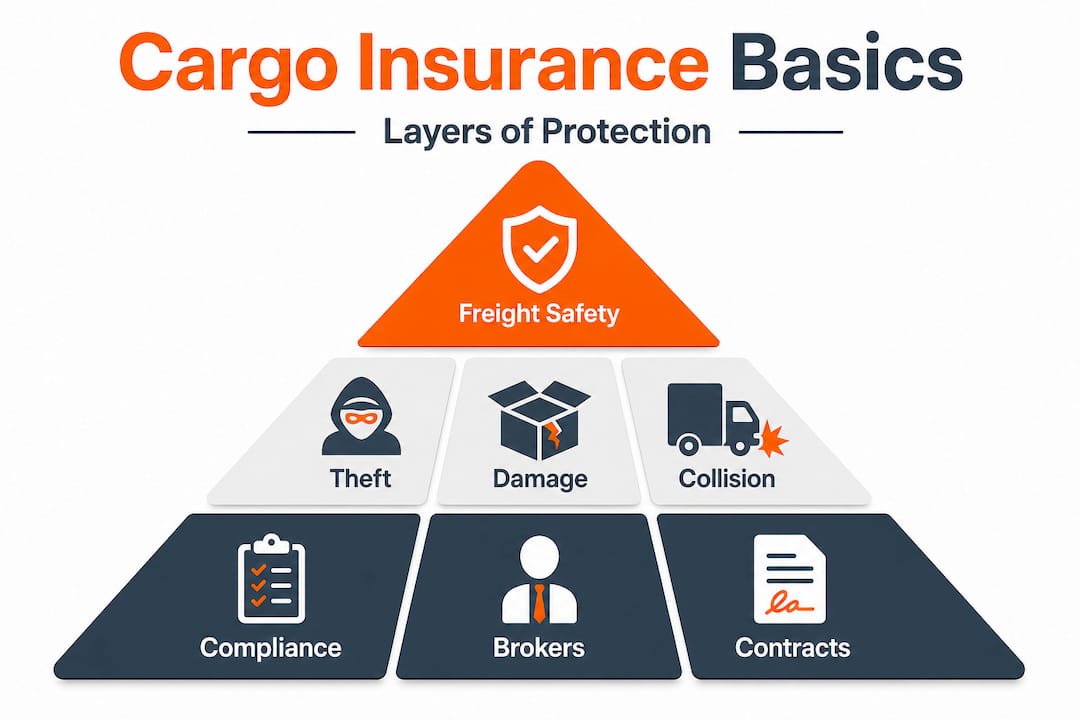
Understanding the basics of cargo insurance essentials starts with recognizing that cargo insurance is a legal and commercial necessity for anyone moving goods for hire. The policy is typically written in the name of the motor carrier, meaning you as the trucking business, and it responds when freight in your custody is damaged or lost.
Here is a quick look at the major coverage categories and how motor truck cargo insurance differs from related policies:
Coverage type | What it protects | Does it cover freight? |
Commercial auto liability | Third-party injury and property damage | No |
Physical damage (collision/comp) | Your truck and trailer | No |
General liability | On-premises and operational incidents | Generally no |
Motor truck cargo insurance | Goods in your custody during transit | Yes |
Shipper’s interest insurance | The shipper’s own goods | Yes, but held by the shipper |
The practical difference matters enormously. A fleet that carries high-value electronics, fresh produce, or industrial equipment can face a single-load loss that exceeds $100,000. If cargo insurance is not in place, that loss comes directly out of the business.
Common examples of incidents covered by motor truck cargo insurance include:
Theft of an entire load from a truck stop or staging yard
Collision damage where cargo is crushed or broken during a wreck
Fire that destroys goods while the truck is parked or in motion
Water damage from flooding or a trailer roof failure during heavy rain
Cargo shifting during sudden stops that causes breakage
Hijacking and forced theft by third parties
For a more detailed review of truck insurance basics, it helps to map out exactly what each policy layer does so you never assume coverage exists where it does not.
Key coverages: what motor truck cargo insurance includes
Once you understand the definition, the next step is reading the actual policy. Not all cargo policies are written the same way, and the difference between a well-structured policy and a bare-bones one can be the difference between a fully paid claim and a painful denial.
Coverage typically includes theft, fire, and collision losses as core perils, but policies vary significantly in how they define each of those perils and what conditions apply. A comprehensive trucking insurance guide will always direct fleet operators to read past the declarations page and into the actual policy language.

Here is a comparison table showing what is commonly included versus what is commonly excluded:
Typically covered | Typically excluded |
Theft with signs of forced entry | Employee theft or dishonesty |
Fire and explosion | Cargo that is inherently fragile (glassware, artwork) |
Collision and overturn | Hazardous materials (without specific endorsement) |
Vandalism | Perishables that spoil due to delays, not damage |
Loading and unloading accidents (if endorsed) | Contraband or illegally transported goods |
Refrigeration breakdown (if endorsed) | Livestock (requires separate policy) |
Debris removal (if endorsed) | Losses from improper packing by the shipper |
Optional coverages are where smart fleet operators customize their protection. Fleet insurance coverage for diverse cargo types often requires a series of endorsements added onto the base policy. The most important optional coverages to discuss with a licensed professional include:
Refrigeration breakdown coverage: Protects temperature-sensitive loads like food and pharmaceuticals when the reefer unit fails mechanically. This is non-negotiable for cold chain carriers.
Loading and unloading coverage: Covers damage that occurs while freight is being moved on or off the truck. Standard policies often exclude this window of risk.
Debris removal coverage: Pays for the cost of clearing hazardous or bulky cargo from a roadway after an accident. Without it, cleanup costs are yours to bear.
Earned freight coverage: Reimburses the carrier for lost revenue when a load is destroyed and cannot be delivered, meaning you do not get paid for a load you never successfully hauled.
Refrigerated goods spoilage coverage: Distinct from reefer breakdown, this covers the value of the spoiled product itself, not just the mechanical failure that caused it.
Pro Tip: Always ask your licensed insurance professional to walk you through every sublimit in the policy. A policy might show a $250,000 cargo limit, but a sublimit for any single conveyance or any single location might cap a theft claim at $50,000. Sublimits are one of the most common reasons fleet owners receive partial claim payments that do not reflect their actual losses.
Cargo liability tips from experienced professionals consistently point to the fine print around exclusions as the most neglected part of the policy review process. Read every exclusion carefully before signing. If something is excluded that represents a real risk in your operation, ask about endorsements to close that gap.
Who needs motor truck cargo insurance and why
The question of who needs this coverage is simpler than most people think. If you move goods for someone else and get paid to do it, you need motor truck cargo insurance. Full stop.
Trucking companies that transport goods for hire are most exposed to cargo liability risks because they are legally and contractually responsible for the freight from the moment they accept a load to the moment it is delivered. The profile of businesses that require this coverage includes:
Owner-operators hauling for brokers or shippers who are responsible for the load under their own operating authority
Small and mid-size fleets carrying goods under contracts that specifically require cargo insurance as a condition of doing business
Contract haulers under long-term agreements with manufacturers or retailers who mandate minimum cargo coverage limits
Intermodal carriers who pick up and deliver containers from ports or rail yards and take custody of goods for the final mile
Specialized carriers transporting high-value goods like electronics, medical equipment, or pharmaceuticals where a single load loss could be catastrophic
The consequences of going without sufficient cargo coverage go well beyond a single unpaid claim. Consider this:
“A carrier that delivers a load of high-end electronics worth $180,000 and cannot pay a claim for theft may face a lawsuit, a suspended operating agreement, and permanent damage to their relationship with the shipper. One uninsured incident can end a trucking business that took years to build.”
Beyond the immediate financial loss, carriers that cannot demonstrate insurance compliance often lose broker relationships entirely. Most freight brokers now require proof of cargo insurance before they will assign loads. Shippers with dedicated contracts almost universally include insurance minimums in the carrier agreement. Failing to meet those minimums means you cannot legally haul under the contract, even if you have a truck ready to roll.
There is also the issue of personal liability. If your business is structured as a sole proprietorship or a single-member LLC without sufficient insurance, a cargo claim that exceeds your business assets can potentially reach personal assets depending on your state’s laws and how the claim is pursued.
Trucking company insurance tips consistently emphasize that the minimum coverage most brokers accept is $100,000 per occurrence, but that number may be far below what your actual loads are worth. Matching your coverage limit to the realistic value of your highest-risk loads is a fundamental step in protecting the business you have built.
How to evaluate and choose motor truck cargo insurance policies
Shopping for cargo insurance is not the same as buying a personal auto policy online. The risk variables are more complex, the dollar amounts are larger, and the policy language requires careful interpretation. Knowing what to look for makes the process significantly less overwhelming.
Policy selection should be tailored to cargo value, route risks, and client requirements. That means you cannot use a one-size-fits-all policy if your operation hauls a mix of cargo types, operates across multiple states, or has clients with specific insurance requirements in their contracts.
Here is a checklist of the key factors to evaluate when comparing cargo insurance policies:
Cargo type: Some policies are written for general freight and may not adequately cover specialized cargo. Electronics, produce, and automotive parts all carry different risk profiles.
Coverage limits: Your limit should reflect the maximum value of a single load you could be carrying. If you regularly haul loads worth $200,000 or more, a $100,000 policy creates a serious gap.
Per-occurrence vs. per-load limits: Understand whether the policy limit applies to a single incident or per load. For multi-trailer fleets, this distinction is critical.
Exclusions: Map every exclusion against your actual operation. If an exclusion applies to something you haul regularly, you have a coverage gap that needs to be addressed.
Deductibles: A lower premium often means a higher deductible. Calculate what your deductible would cost against a typical small claim to make sure the math makes sense for your cash flow.
Insurer reputation for claims handling: A cargo claim needs to be paid quickly. Ask about average claim processing times and whether the insurer has experience with trucking claims specifically.
Policy endorsements available: Confirm that the endorsements you need, such as reefer breakdown or loading coverage, are actually available and that you understand their pricing.
When comparing policies, ask these questions directly:
Is coverage written on an all-risk or named-perils basis? All-risk is broader and generally preferable.
Are there any geographic exclusions for routes you regularly travel?
Does the policy cover unattended vehicles, and are there conditions like locked trailer requirements?
How does the policy handle cargo abandoned after an accident?
Does the policy require theft claims to show signs of forced entry?
Truck insurance shopping becomes far more productive when you walk into the process with these questions already prepared. It signals to the licensed professional you are working with that you understand your risks, and it helps them find coverage that actually fits your operation.
Pro Tip: Working with a specialist in trucking insurance through insurance broker benefits means accessing markets and policy structures that are not available through general commercial lines channels. A trucking specialist understands the nuances of cargo coverage, knows which insurers pay claims fairly, and can negotiate endorsements that a general broker might not know to ask for.
What most fleet owners overlook about cargo insurance
Here is an uncomfortable truth that most coverage articles will not say directly: having a cargo insurance policy is not the same as being covered. The gap between those two things is where fleets get hurt, and the pattern repeats itself constantly.
The most frequent source of claim denials is not fraud or catastrophic events. It is the routine exclusions and conditions buried in the policy that the insured never read carefully. Unattended vehicle clauses are a perfect example. Many cargo policies require a loaded trailer to be parked in a secured facility overnight. If a theft occurs from a truck stop or a street parking spot and that condition was not met, the claim is denied. The insured paid premiums for years and receives nothing because of a single condition violation.
Sublimits are equally dangerous. We touched on this earlier, but the real-world impact deserves more attention. A fleet owner who believes they have $300,000 in cargo coverage may be shocked to discover that their policy has a $75,000 sublimit per any one vehicle. If they are running three trucks simultaneously and one is wiped out in a fire, the maximum recovery is $75,000, regardless of what the load was worth. Reading past the coverage summary to the actual sublimit schedule takes thirty minutes and can prevent a six-figure shock.
Another pattern that experienced operators recognize too late is the failure to update coverage as the business grows. A policy written when you were running two trucks and hauling general freight may be completely inadequate two years later when you have six trucks and a contract to move medical devices. The cargo values changed, the risk profile changed, and the policy was never reviewed. Annual policy reviews are not administrative busywork. They are a genuine risk management function.
The contrarian insight worth sitting with is this: paying slightly more for higher limits or broader coverage is almost always the right financial decision in trucking. The cost difference between a $150,000 and a $250,000 cargo limit is often smaller than people expect, but the difference in claim outcome when a high-value load is destroyed is enormous. Fleet owners who optimize aggressively for the lowest premium often discover that they have created a false sense of security that costs far more than the money they saved.
Reviewing cargo claim pitfalls annually as your operation evolves is one of the highest-value habits a fleet owner can develop. The freight market changes. Your clients change. The value of what you haul changes. Your insurance should change with it.
Get the right motor truck cargo insurance for your fleet
Understanding cargo insurance is the first step. Getting the right policy in place is what actually protects your business when something goes wrong on the road.
Insuaria is built to help trucking businesses like yours organize the information that licensed insurance professionals need to review your coverage situation. Through our simple business insurance process, you can submit the details of your operation, your cargo types, your fleet size, and your current coverage so that a licensed agency partner can follow up with relevant options. If you are looking to start the process quickly, you can also use our truck insurance quotes intake path to get your information in front of the right professionals. Insuaria does not sell or bind insurance, but we make sure you walk into the conversation fully prepared.
Frequently asked questions
What is the main purpose of motor truck cargo insurance?
Motor truck cargo insurance protects carriers against financial loss from damage or loss of goods being transported, covering the freight itself rather than the vehicle. Cargo insurance covers loss to freight during transit, making it a foundational protection for any carrier hauling goods for hire.
Does motor truck cargo insurance cover all types of cargo losses?
Most policies cover common risks like theft, fire, and collision, but specific goods, conditions, or types of loss may be excluded. Coverage typically includes theft and fire losses, but reviewing exclusions carefully is essential to understanding the real scope of protection your policy provides.
Who is legally required to have motor truck cargo insurance?
Carriers hauling freight for hire are generally required by shippers, brokers, and contract agreements to carry adequate cargo insurance as a condition of doing business. Trucking companies transporting goods for hire face the greatest exposure to cargo liability claims and are most frequently subject to contractual insurance minimums.
How much cargo insurance coverage should a fleet carry?
The right amount depends on the value of your highest-risk loads, your typical routes, and the insurance requirements in your client contracts. Policy limits should be tailored to cargo value and route risks rather than defaulting to the lowest limit a broker will accept.
Recommended
Comments